
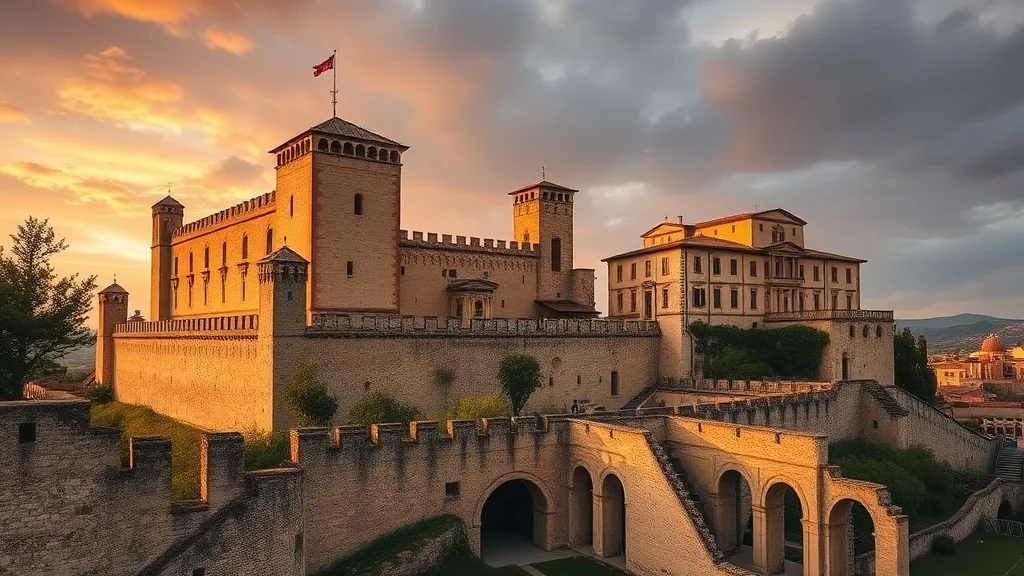
Perched on the Adriatic coast in the Abruzzo region, Vasto is a hidden gem for history enthusiasts seeking to uncover Italy’s rich past. This charming medieval town boasts a remarkable collection of historical sites and museums that chronicle centuries of cultural, artistic, and archaeological significance. From Renaissance palaces to ancient Roman ruins, Vasto offers visitors an intimate glimpse into the layers of history that have shaped this coastal settlement.
Travelers exploring Vasto will discover a destination where art, architecture, and archaeology converge in unexpected ways. The town’s museums housed within historic palazzo structures provide exceptional collections ranging from Renaissance paintings to ancient Roman artifacts. Whether wandering through ancient fortifications or admiring masterpieces in beautifully preserved noble residences, visitors will find themselves transported through time in this authentic Italian destination.
Quick Picks
1Palazzo d’Avalos
📍 Vasto

233 reviews
Photos via  TripAdvisor
Palazzo d’Avalos stands as one of Vasto’s most significant Renaissance treasures, commanding a prestigious position in the heart of this charming Abruzzo coastal town. Built in the 16th century as the residence of the D’Avalos noble family, this magnificent palace served as a symbol of aristocratic power and refined taste that shaped Vasto’s cultural landscape for centuries. Today, it houses important museums that preserve the rich heritage of both the city and the broader Adriatic coast region.
Visitors exploring Palazzo d’Avalos discover multiple museums within its elegant walls, including archaeological collections that tell the story of ancient Histonium and artistic displays showcasing regional craftsmanship. The palace’s beautifully maintained gardens provide a peaceful retreat with stunning panoramic views over the Adriatic Sea, making it a perfect spot for contemplation and photography. The Renaissance architecture itself tells a compelling story through its ornate facades, decorative elements, and carefully preserved interiors that transport guests back to a golden age of Italian nobility.
“”Palazzo d’Avalos stands as a magnificent testament to Renaissance splendor, where centuries of aristocratic elegance and cultural heritage echo through its storied halls.””
2Castello Caldoresco
📍 Vasto

50 reviews
Photos via TripAdvisor
Castello Caldoresco stands as a commanding presence in Vasto’s historic center, its 15th-century Aragonese architecture telling the story of this ancient Adriatic coastal town. Built during the reign of Giacomo Caldora in the early 1400s, this fortress represents one of the most significant examples of medieval military architecture along the Abruzzo coast. The castle served as both a defensive stronghold and noble residence, playing a crucial role in protecting Vasto from maritime invasions.
Visitors exploring the castle grounds will discover well-preserved stone walls, ancient towers, and panoramic terraces that offer sweeping views over the Adriatic Sea and Vasto’s terracotta rooftops. The fortress features typical Aragonese architectural elements, including robust defensive walls and strategic positioning that maximizes both protection and visibility. The castle’s elevated location provides an excellent vantage point for understanding Vasto’s medieval urban layout and its relationship with the surrounding coastline.
“Where Aragonese stone meets Adriatic winds, Castello Caldoresco stands as a steadfast sentinel of Vasto’s medieval past, its 15th-century walls still echoing the valor of ancient defenses.”
3Pinacoteca di Palazzo d’Avalos
📍 Vasto

233 reviews
Photos via TripAdvisor
The Pinacoteca di Palazzo d’Avalos stands as one of Vasto’s premier cultural treasures, housed within the historic d’Avalos Palace that overlooks the Adriatic coastline. This distinguished art gallery showcases an impressive collection primarily featuring works from the renowned Neapolitan school, offering visitors a journey through centuries of Southern Italian artistic heritage. The palace itself carries deep historical significance, having served as the residence of the noble d’Avalos family who played a crucial role in shaping Vasto’s cultural landscape.
Visitors can explore carefully curated galleries displaying paintings, sculptures, and decorative arts that span multiple periods of Italian art history. The Neapolitan school works form the heart of the collection, featuring characteristic baroque sensibilities and masterful use of light and color that defined this influential artistic movement. The museum’s intimate setting allows for close appreciation of each piece, while the palace’s elegant rooms provide a fitting backdrop that enhances the viewing experience.
“Where noble history meets artistic mastery, the Pinacoteca di Palazzo d’Avalos unveils centuries of Neapolitan brilliance against the backdrop of the Adriatic Sea.”
4Museo Archeologico di Palazzo d’Avalos
📍 Vasto

233 reviews
Photos via TripAdvisor
The Museo Archeologico di Palazzo d’Avalos stands as Vasto’s premier cultural institution, housed within the magnificent Renaissance palace that once served as the residence of the D’Avalos noble family. This archaeological museum preserves and showcases the rich Roman heritage of ancient Histonium, the predecessor to modern Vasto, offering visitors an invaluable glimpse into the area’s significance along the Adriatic coast during antiquity.
Visitors exploring the museum’s carefully curated galleries will discover an impressive collection of Roman artifacts, including ancient pottery, coins, sculptures, and architectural fragments that tell the story of daily life in Histonium. The museum’s displays illuminate how this coastal settlement thrived as an important trading post, with exhibits featuring maritime archaeological finds and decorative objects that reflect the prosperity of Roman Abruzzo.
“”Within these Renaissance walls lies the living legacy of ancient Histonium, where Roman artifacts whisper the stories of a civilization that once thrived along the Adriatic shores.””
5Terme Romane di Histonium
📍 Vasto

40 reviews
Photos via TripAdvisor
The Terme Romane di Histonium stand as remarkable remnants of ancient Roman civilization in the heart of Vasto, offering visitors a glimpse into the sophisticated bathing culture of the Imperial period. These well-preserved thermal baths represent one of the most significant archaeological discoveries along the Abruzzo coast, demonstrating the prosperity and urban development of ancient Histonium, the Roman settlement that would eventually become modern-day Vasto.
Visitors can explore the excavated remains of this ancient spa complex, where Roman citizens once gathered for social interaction and relaxation. The site reveals the intricate hypocaust heating system, mosaic fragments, and structural elements that showcase Roman engineering prowess. Archaeological findings provide insight into daily life during the Imperial era, making this an educational experience for those interested in understanding how Romans lived and socialized.
“The Terme Romane di Histonium reveal the sophisticated leisure and engineering prowess of ancient Rome, where emperors and citizens alike sought solace in steaming waters.”
6Loggia Amblingh
📍 Vasto
404 reviews
Photos via TripAdvisor
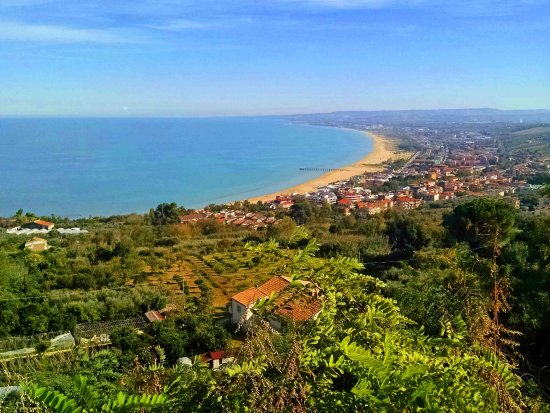
Loggia Amblingh stands as Vasto’s most celebrated panoramic viewpoint, earning its reputation as the ‘balcony of Vasto’ through its breathtaking vistas over the Adriatic Sea. This historic terrace represents one of the most important scenic overlooks along the entire Abruzzo coast, offering visitors an unparalleled perspective of the medieval town’s relationship with the sea that has shaped its identity for centuries.
Visitors to Loggia Amblingh will discover a beautifully maintained terrace that frames the endless blue expanse of the Adriatic, with the historic center of Vasto spreading out behind them. The panoramic views encompass the dramatic coastline stretching both north and south, while on clear days, the distant peaks of the Majella mountains provide a stunning backdrop. The terrace itself features elegant architectural details that complement the natural beauty of the setting.
“From Loggia Amblingh, the Adriatic unfolds before you like a timeless canvas, reminding us why the sea has been the heartbeat of Vasto’s soul for centuries.”
7Torre di Bassano
📍 Vasto

13 reviews
Photos via TripAdvisor
Torre di Bassano stands as a testament to Vasto’s strategic coastal defense history, representing one of the watchtowers that once protected the Abruzzo coastline from maritime threats. This historic defensive structure was part of a network of coastal fortifications built to safeguard the Adriatic shores, playing a crucial role in the region’s maritime security system. The tower embodies centuries of coastal history and represents Vasto’s enduring connection to the sea.
Visitors approaching Torre di Bassano will encounter a robust stone structure that has weathered countless seasons overlooking the Adriatic waters. The tower’s commanding position offers expansive views of the coastline, allowing guests to appreciate both its defensive purpose and the natural beauty of the Abruzzo coast. The weathered stonework and architectural details reveal the craftsmanship of ancient builders who constructed this enduring monument.
“Torre di Bassano stands as a sentinel of the sea, embodying centuries of Vasto’s vigilant defense against the maritime threats that once challenged the Adriatic shores.”
8Monumento alla Bagnante
📍 Vasto

1 reviews
Photos via TripAdvisor
Standing gracefully on Vasto’s picturesque Lungomare Cordella, the Monumento alla Bagnante (Monument to the Bather) has become one of the Adriatic coast’s most beloved and photographed sculptures. Created by renowned artist Aldo D’Adamo, this striking bronze figure depicts a woman in a flowing dress, captured in an eternal moment as she gazes out toward the endless blue horizon of the Adriatic Sea.
The sculpture embodies the timeless connection between Vasto and its stunning coastline, celebrating the town’s identity as a premier seaside destination. D’Adamo’s masterful work captures both movement and serenity, with the bronze figure’s dress appearing to dance in the coastal breeze while her pose suggests quiet contemplation. The monument has become a symbol of Vasto’s maritime heritage and its enduring appeal to visitors seeking beauty and tranquility along Italy’s eastern shores.
“A graceful bronze figure eternally gazing toward the Adriatic, the Monumento alla Bagnante captures the timeless romance between Vasto and its shimmering sea.”
9Porta Catena
📍 Vasto

2 reviews
Photos via TripAdvisor
Porta Catena stands as one of Vasto’s most significant medieval gateways, marking the ancient entrance to the historic center of this charming Adriatic coastal town. Located at Loggia Amblingh, this well-preserved stone portal offers visitors a tangible connection to Vasto’s rich medieval heritage and its strategic importance along the Abruzzo coast.
The gateway represents a fascinating piece of the town’s defensive architecture, dating back to when Vasto was a fortified settlement overlooking the Adriatic Sea. Its sturdy stone construction and architectural details provide insight into the medieval building techniques and the town’s historical significance as a coastal stronghold in the region.
“Porta Catena stands as a weathered sentinel of Vasto’s medieval past, its ancient stones whispering stories of centuries spent guarding the threshold between the sea and the historic heart of this Adriatic jewel.”
10Monumento a Gabriele Rossetti
📍 Vasto

4 reviews
Photos via TripAdvisor
Standing proudly in the heart of Vasto’s historic center, the Monumento a Gabriele Rossetti honors one of Italy’s most celebrated Romantic poets and patriots. This elegant memorial commemorates the life and works of Gabriele Rossetti (1783-1854), a Vasto native who became a prominent figure in Italian literature and the Risorgimento movement. The monument serves as a testament to the cultural richness that has long characterized this charming Abruzzo coastal town.
Gabriele Rossetti was not only a distinguished poet but also a political activist who fought for Italian unification before eventually seeking exile in London, where he became a professor of Italian literature. His legacy extends beyond his own achievements, as he was the father of the famous Pre-Raphaelite artists Dante Gabriel Rossetti and Christina Rossetti, making the Rossetti family name internationally renowned in artistic circles.
“This elegant memorial stands as a tribute to Gabriele Rossetti, a Vasto native whose passionate words and patriotic spirit helped shape the soul of modern Italy.”
💡 Insider Tips
Combine Museum Visits for Efficiency: The Pinacoteca and Museo Archeologico are both housed within Palazzo d’Avalos, allowing visitors to maximize their time by exploring multiple collections in a single location. Planning to visit Palazzo d’Avalos first provides an excellent foundation for understanding Vasto’s artistic and historical context before exploring other sites.
Allow Time for Coastal Views: Many of Vasto’s historical sites, particularly Torre di Bassano and various monuments, are strategically positioned throughout the town with stunning Adriatic vistas. Visitors should allow extra time to enjoy the scenic surroundings and photograph these locations during golden hour for optimal lighting.
Visit During Shoulder Seasons: Spring and autumn offer the most comfortable conditions for exploring Vasto’s outdoor historical sites without the summer crowds or excessive heat. These periods also allow for more meaningful interactions with museum staff and clearer sightlines for photography and observation.
Check Hours Before Visiting: Italian museums often have varying hours and may close for lunch periods or specific days of the week, so travelers should verify opening times in advance. Contacting the local tourist information office ensures smooth planning and helps avoid disappointment during visits.
Frequently Asked Questions
Spring (April-May) and autumn (September-October) provide ideal weather conditions for exploring outdoor monuments and sites without overwhelming summer heat or crowds. These seasons also offer comfortable conditions for extended museum visits and leisurely exploration of the medieval town layout.
A comprehensive visit typically requires 2-3 days to properly explore Palazzo d’Avalos with its multiple museums, along with Castello Caldoresco and other significant sites. Travelers with limited time should prioritize Palazzo d’Avalos and the Pinacoteca, which represent Vasto’s most important cultural attractions.
Guided tours may be available at major sites like Palazzo d’Avalos, though availability varies seasonally and should be confirmed in advance through the local tourist office. Many sites provide informative plaques and descriptions in multiple languages for self-guided exploration.
The Museo Archeologico di Palazzo d’Avalos is essential for archaeology enthusiasts, featuring artifacts and exhibits documenting Vasto’s Roman past as ancient Histonium. Visitors can also see ruins of the Terme Romane (Roman thermal baths) to understand the town’s strategic importance in antiquity.
The medieval town layout includes narrow streets and some steep inclines typical of historic Italian settlements, which may present challenges for visitors with limited mobility. However, Palazzo d’Avalos and some primary sites have been adapted for accessibility; visitors should contact the tourist office for specific information about their needs.
Final Thoughts
Vasto stands as an exceptional destination for international travelers seeking authentic historical and cultural experiences beyond Italy’s more famous tourist centers. The town’s impressive collection of museums, palaces, and archaeological sites tells a compelling story of Mediterranean civilizations spanning from Roman times through the Renaissance. Visitors who dedicate time to exploring these historical treasures will discover a destination that rewards curiosity with rich insights into Italian heritage, artistic achievement, and coastal history. Vasto’s combination of world-class art collections, substantial archaeological remains, and beautifully preserved medieval architecture makes it an unmissable destination for history-conscious travelers exploring the Abruzzo region.